What If Disasters is a reaction game: use the preparation window to identify the threat, then pick the survival rule that matches it. Do not automatically run uphill or hide in the nearest building. Floods and lava reward height, Planet Flyby rewards a low position, and a Solar Flare makes exposed roofs dangerous. For the full named event list and grouped response rules, continue to the scenarios guide.
The fastest disaster decision
Use this priority order when a scenario appears:
- Read the disaster name and scan the map. Decide whether the danger comes from the ground, sky, water, air, or a moving structure.
- Move during preparation, not after contact. The game summary describes about 30 seconds to choose a route; use that time to leave shorelines, open streets, unstable towers, or exposed roofs.
- Choose the matching position. Go high for rising water or lava, low for Planet Flyby, inside for toxic air, and behind thick cover for the bomb.
- Keep reassessing. Several scenarios change phase: Mega Storm can become a tornado, Moon Falls moves from water to falling debris and low gravity, and Oxygen Doubles turns fire spread into the main threat.
| Hazard pattern | Best first move | Do not rely on |
|---|---|---|
| Rising water or lava | Leave low ground and climb to a high, stable platform. | Shorelines, exposed tunnels, and low floors. |
| Wind, tornado, or falling debris | Enter a solid enclosed building and move away from windows or the storm path. | A weak building or a shelter directly in the route. |
| Air, heat, or radiation | Find a closed space with a roof and limit time outside. | Open ground, rooftops, and repeated trips outdoors. |
| Gravity, tilt, or earthquakes | Stay flexible: use the new surface direction or a low, stable position. | Tall structures and a memorized route that no longer matches the map. |
| Fire or ground damage | Move continuously toward a clean, elevated, or nonflammable platform. | The current floor, combustible cover, and dead-end corners. |
Water and rising-ground disasters
For All Ice Melts, A 500 m Mega Tsunami, and Rain for 1,000 Years, leave low ground early and climb toward the highest stable location available. The water threat escalates from streets and lower buildings to roofs and, in the long-rain scenario, nearly the entire map. Do not wait on a beach or enter exposed seabed during Ocean Rolls Back: the retreat is a warning, not a safe exploration route.

All Ice Melts 的海平面上升会先淹没桥梁和低地,及时向高处移动。

A 500 m Mega Tsunami 会把洪水推进城市和街道,高处路线比海岸停留更安全。
The Floor Is Lava uses the same height instinct but adds movement pressure. The floor damages players while lava rises, so switch platforms or floors before the current one is submerged. A high point is only useful if it has another route when the lava catches up.
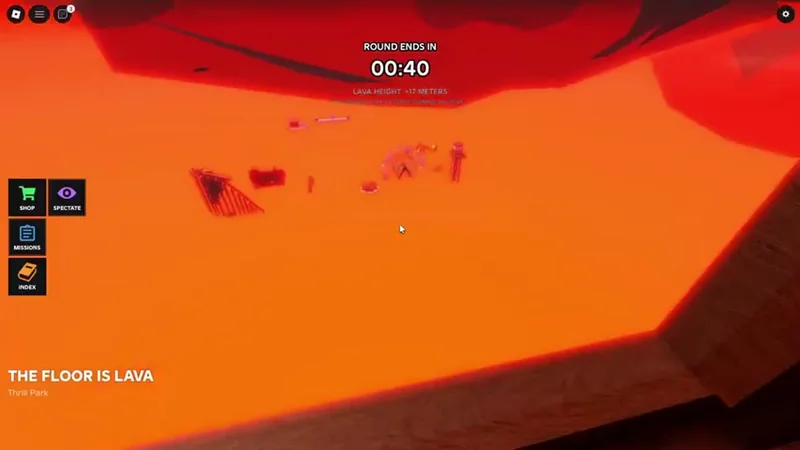
The Floor Is Lava 中,熔岩上升会迫使玩家持续转移到更高的平台。
The Moon Falls is a two-stage escape. First avoid the moving sea and falling fragments; when gravity weakens, grab a fixed structure rather than relying on the ground to hold you. The threat changes, so do not keep following the first route after the map starts lifting objects and players.
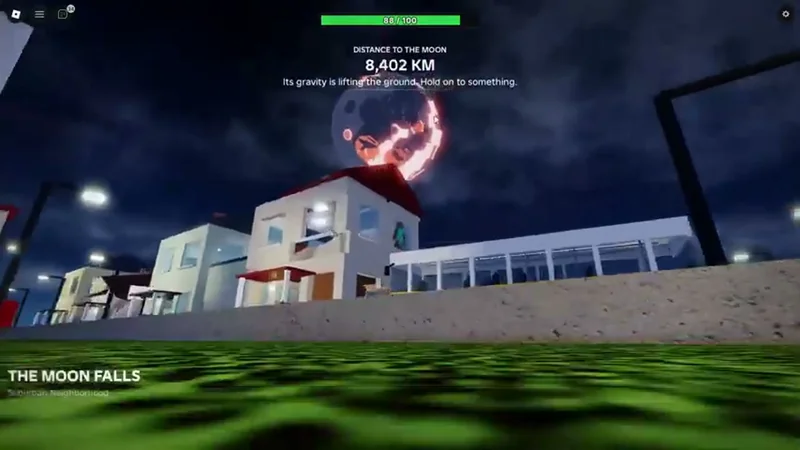
The Moon Falls 会从海水和碎片威胁转为低重力环境,需要重新寻找固定结构。
Wind, cold, fire, and debris
Use solid indoor cover for Earth Enters a Mega Storm, The Sandstorm, and AN EF5 TORNADO HITS YOUR STREET. Mega Storm can intensify from high winds—its HUD is described as reaching about 150 KM/H—to a tornado phase. Stay away from windows and outer walls, and do not assume a building remains safe if the tornado’s path reaches it.

Earth Enters a Mega Storm 会带来风暴、洪水和飞散碎片,室内掩护需要远离危险路径。
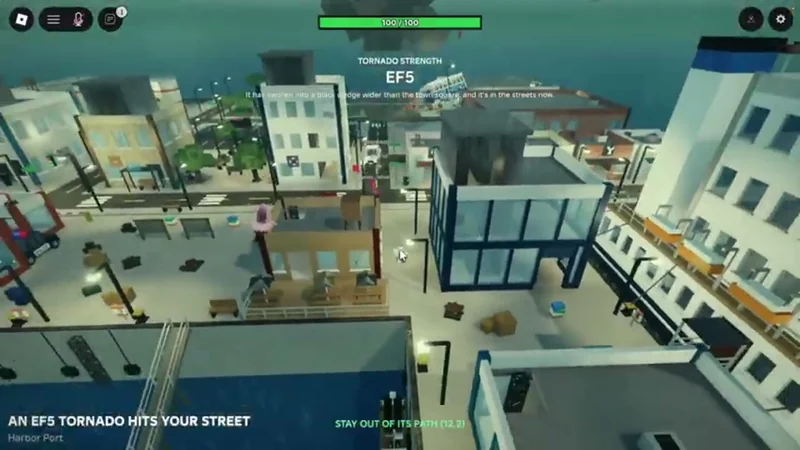
AN EF5 TORNADO HITS YOUR STREET 时,应进入坚固建筑并避开窗户和风暴路径。
For The Biggest Bomb Ever Detonated, put a thick, fixed structure between yourself and the blast direction. The important choice is cover, not simply distance; the supplied evidence does not establish a universal safe radius.

The Biggest Bomb Ever Detonated 中,厚实固定结构应位于玩家和冲击波之间。
For EARTH FREEZES OVER, enter a stable, enclosed building that can retain warmth. For An Earthquake Sequence, do not default to the tallest tower: the scenario includes a 10-level main quake and aftershocks, and buildings can collapse. A low, protected position is preferable when available.
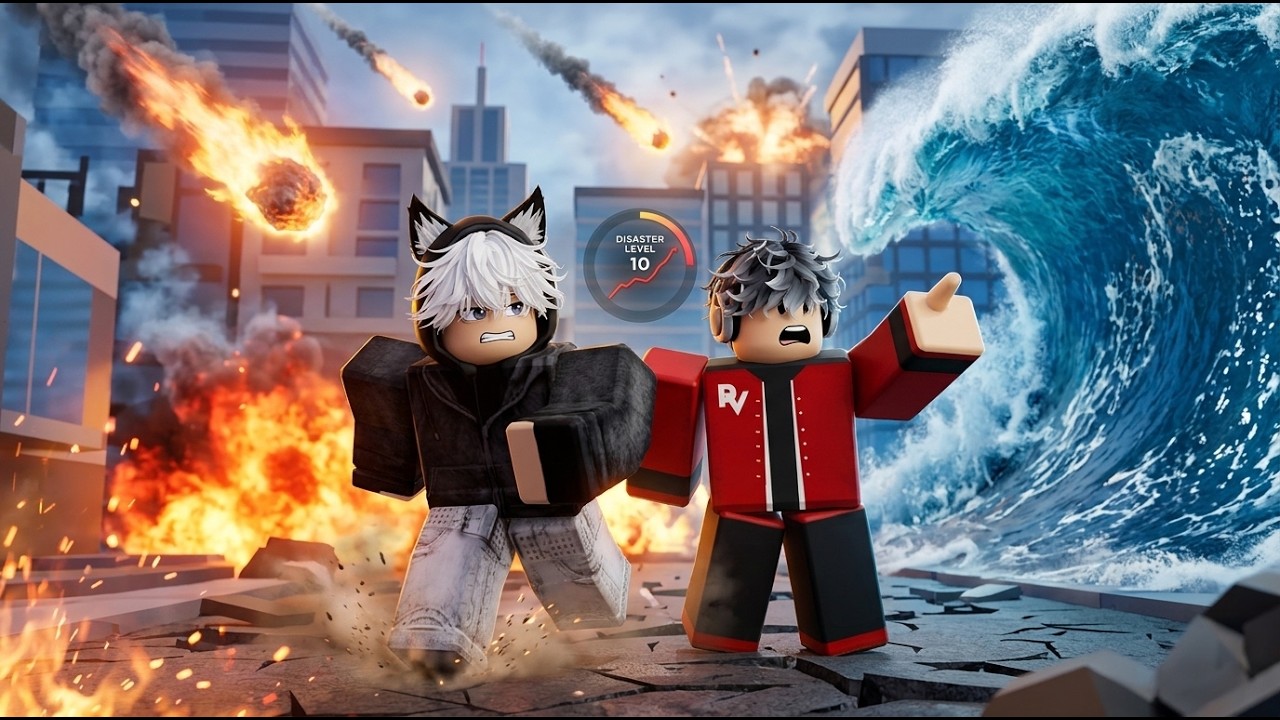
Choose cover for The Biggest Bomb Ever Detonated
This moment supports the bomb scenario's warning to prioritize thick, fixed cover between the player and the blast rather than relying on distance alone.

EARTH FREEZES OVER 会带来积雪和低温,稳定的封闭建筑有助于保留热量。

An Earthquake Sequence 包含强震和余震,低而受保护的位置比高塔更可靠。
EVERY VOLCANO ERUPTS combines falling rocks with ground cracks and lava. Avoid open paths beneath falling debris and do not stand beside a crack simply because the route looks clear. Yellowstone Erupts likewise favors staying under a roof, while The Witching Hour demands immediate movement away from black thorns growing through streets and buildings.

EVERY VOLCANO ERUPTS 会同时带来落石、地面裂缝和熔岩,开放路径并不安全。
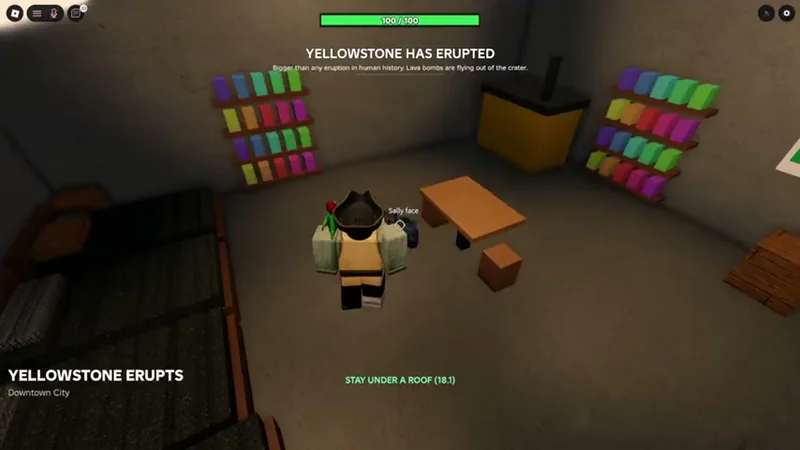
Yellowstone Erupts 时应遵循 stay under a roof 的掩护要求。
Air, light, and planet hazards
For The Atmosphere Disappears, use a fixed, enclosed space with cover. Windows can break, loose objects can be blown away, and ordinary sound warnings may not work as expected. For Toxic Air, treat the building as the route: enter once, avoid unnecessary exits, and do not trade shelter for a shortcut outside.

The Atmosphere Disappears 的红色天空和飞散物提示玩家留在固定、封闭的掩护中。
Oxygen Doubles is a fire-spread scenario. Flames can move rapidly across the ground and vines, with one record describing roughly 6.2 times ordinary fire speed. Reach a space without nearby fuel and avoid crossing burning ground; the exact damage timing is not documented.
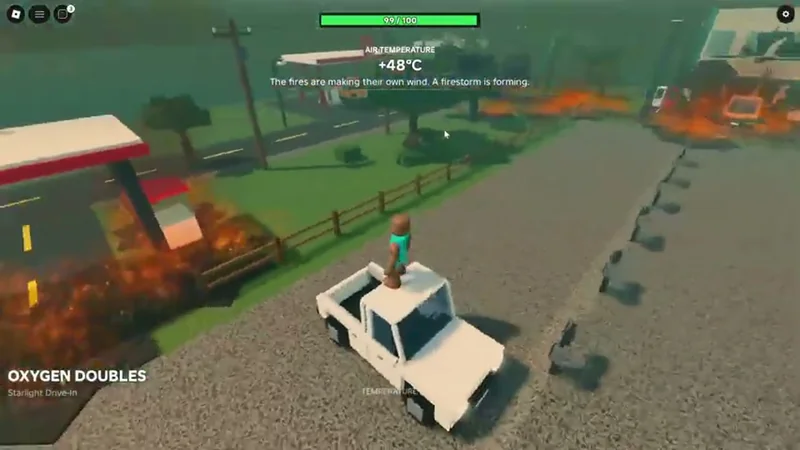
Oxygen Doubles 中火焰会快速蔓延,应避开燃烧地面和附近燃料。
During The Greatest Solar Flare, avoid roofs and exposed upper surfaces. The scenario is reported to disable electronics and make rooftops dangerous, so the roof strategy that helps against floods can be the wrong choice here. THE SUN DISAPPEARS instead combines darkness, power loss, and falling temperature: get indoors quickly and reduce exposure.
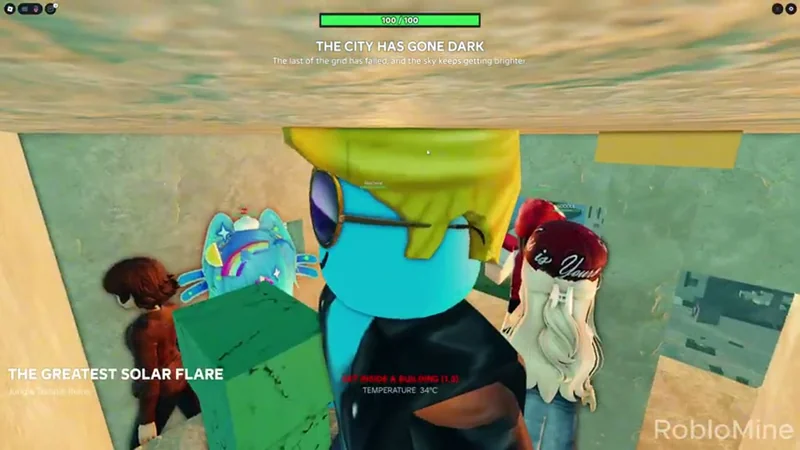
The Greatest Solar Flare 会让城市停电并使屋顶变得危险,应转入室内。
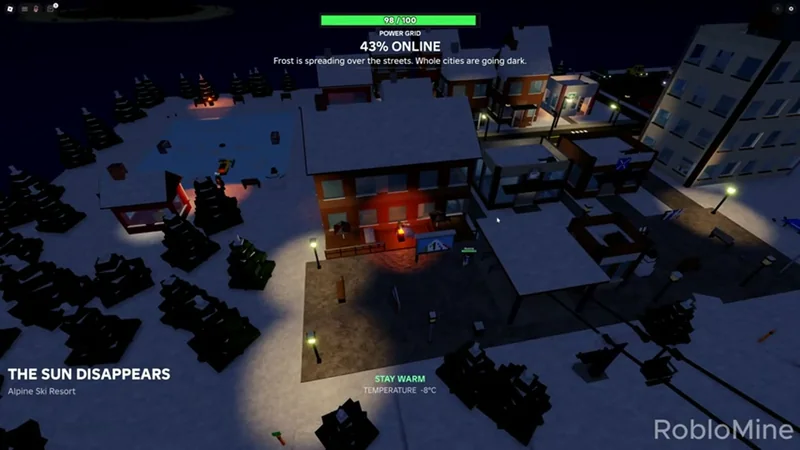
THE SUN DISAPPEARS 带来黑暗、降温和失电,快速进入室内可减少暴露。
For Planet Flyby, follow the opposite of the flood rule: stay down low. The passing planet can pull in fragments, buildings, and players, and towers may fall. Earth Spins Backwards is a route-reassessment disaster; wind direction changes, so re-check the safe side instead of repeating a route learned from an earlier wind event.
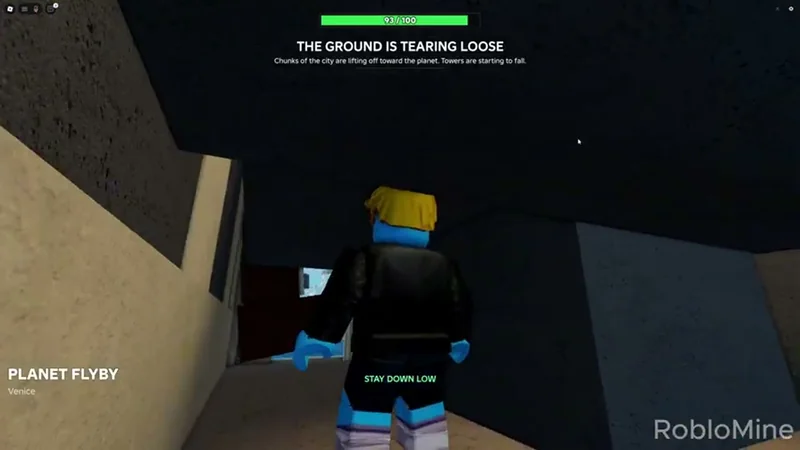
Planet Flyby 会改变引力并拉动碎片、建筑和玩家,低位路线比高塔更合适。
Ground-changing and biological disasters
Earth Tilts 90 Degrees changes what counts as a floor. Move with the new map direction, use former walls as possible routes, and avoid the incoming seawater path. The goal is not to preserve the old orientation but to find a stable surface after the tilt.

Earth Tilts 90 Degrees 会改变地图方向并让海水冲入,玩家需要寻找新的稳定表面。
For Zombie Outbreak, keep moving away from infected areas and use buildings or terrain to create separation. The supplied evidence does not document a complete infection timer or a guaranteed cure, so prioritize avoidance rather than waiting for a recovery mechanic.
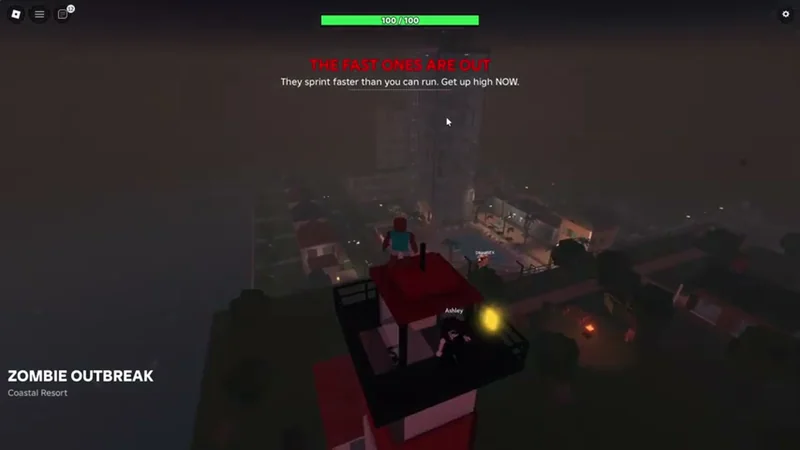
Zombie Outbreak 中应远离感染区域,并利用建筑或地形保持距离。
How to recover from a failed first move
- If water or lava reaches your position, stop searching for a perfect destination and take the nearest higher stable platform with a second route.
- If wind or debris destroys your shelter, leave the damaged structure and move perpendicular to the visible path when possible; do not remain beside a collapsing wall.
- If gravity or the map orientation changes, discard the old route and identify a new fixed surface.
- If the threat is air, heat, or radiation, shorten outdoor movement and choose enclosed cover over a longer exposed route.
- If the disaster has multiple phases, follow the current effect shown on the map rather than the opening effect.
Frequently asked questions
Should I always climb to the highest building?
No. Height is the right response to many water and lava scenarios, but it is not universal. Planet Flyby favors a low position, earthquakes can collapse tall structures, and Solar Flare makes roofs dangerous.
What is the most important use of the preparation window?
Identify the hazard and the map’s escape geometry. Find a high route for water, a roofed solid building for wind or toxic air, thick cover for the bomb, and a low position for Planet Flyby before the effect reaches you.
Are exact damage values and disaster durations documented?
Not for the full disaster list. The available evidence gives useful effects and routes, plus some observations such as the 150 KM/H storm HUD and approximate fire-speed comparison, but it does not establish a complete damage, duration, or safe-radius table.
SourcesReviewed October 27, 2026
https://what-if-disasters.wiki/disasters
https://whatifdisasters.wiki/disasters/what-if-disasters-disasters-list
https://whatifdisasters.wiki/survival/what-if-disasters-how-to-play
https://www.roblox.com/games/109440485612336/What-If-Disasters
The disaster effects and survival routes are summarized from the supplied public wiki records and player observations. Exact disaster durations, fixed damage values, universal safe radii, and complete vehicle protection rules are not documented in the supplied evidence. Some video captions are automatic transcriptions, so use the in-game HUD and current scenario behavior when a number or disaster phase matters.