What If Disasters Scenarios Guide
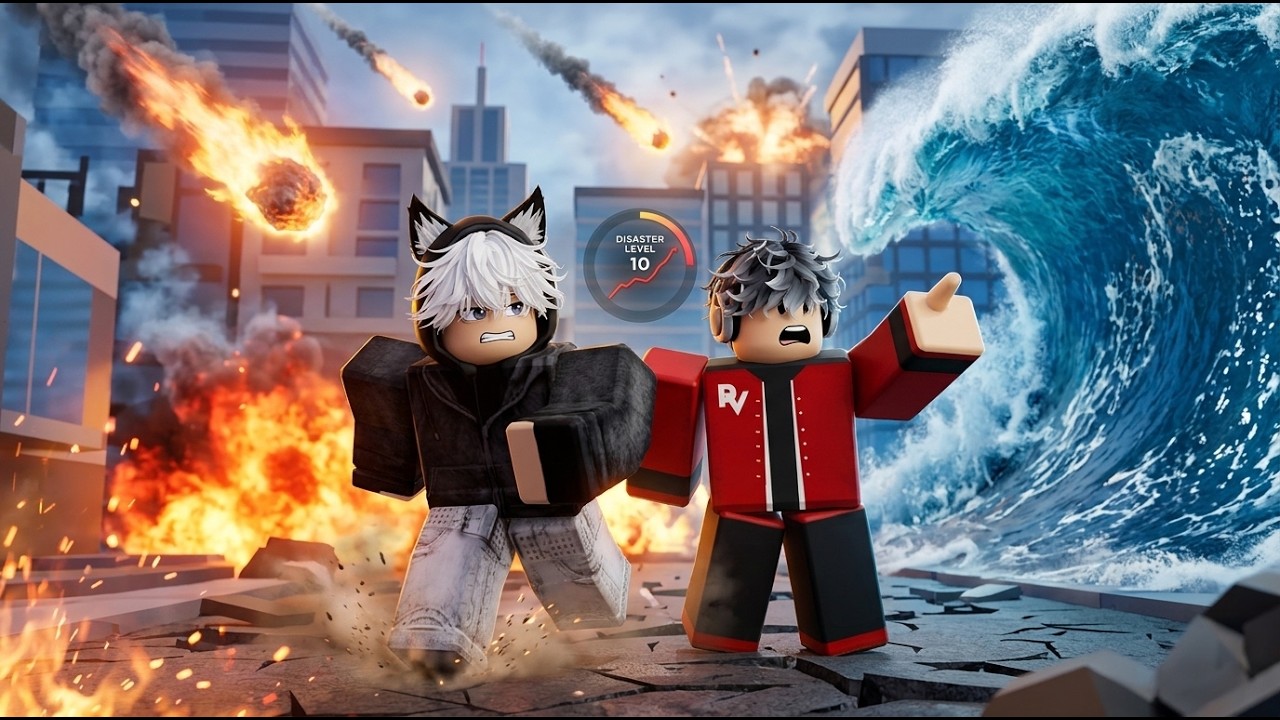
In What If Disasters, surviving a scenario starts with identifying the hazard, not running to the tallest object. Water scenarios usually reward high ground, while cold, toxic air, radiation, and some cosmic events require an enclosed room. Explosions need a solid wall between you and the blast, and earthquakes can make a tall building more dangerous than the street.
How to read a scenario
When the scenario banner appears, classify the event by its main threat: Water, Wind, Ground, Temperature, Cosmic, Biological, Fire, Gravity, or Blast. Then use this order:
- Spot the environmental change. Rising water, a moving tornado, falling debris, darkness, cold, or a changed horizon tells you what kind of safety matters.
- Choose the matching shelter. Move to high ground for flooding, an interior for air or temperature hazards, and a concrete or otherwise sturdy barrier for a shockwave.
- Keep an exit route. A vehicle can help cross some dangerous areas, but it is not a replacement for a sealed room, roofed shelter, high floor, or hard cover.
- Re-check after the first phase. Moon Falls and The Ocean Rolls Back change threat direction or timing, so the first safe-looking route may stop being safe.
Shelter during Moon Falls and Solar Flare phases
This moment supports checking the threat phase and moving inside when Moon Falls or a Solar Flare makes exposed routes unsafe.
Complete scenario list
The table below groups the 24 named scenarios in the supplied scenario records by their primary survival decision. The evidence summary refers to 26 wiki records, but does not name two additional records in the supplied table. These are practical classifications, not a guarantee that every event behaves identically on every map.
| Scenario | Main threat | What changes | First survival decision |
|---|---|---|---|
| Mega Tsunami | Water | A large wave advances from the coast and floods low ground. | Climb immediately; use high ground or an upper floor. |
| Moon Falls | Cosmic / Water | Gravity changes, seawater surges, a tsunami follows, and the moon can break apart. | Get indoors and away from the coast before the water arrives. |
| Sun Disappears | Cosmic / Temperature | Darkness and falling temperature make open areas unsafe. | Stay inside a warm, enclosed building. |
| The Greatest Solar Flare | Cosmic | Radiation and equipment failure make exposed areas, especially roofs, dangerous. | Leave the roof and move inside. |
| Rain for 1,000 Years | Water | Water rises for an extended rain event, breaking up low routes and leaving islands. | Reach the highest terrain or upper floor before low ground is lost. |
| All Ice Melts | Water | Meltwater raises the sea around coasts and low ground. | Move uphill and remain dry. |
| The Ocean Rolls Back | Water | The sea retreats, then returns rapidly. | Treat the retreat as a warning; go uphill instead of exploring the seabed. |
| F5 Tornado | Wind | A tornado crosses streets and throws debris. | Track its movement and use a sturdy building or protected position. |
| Mega Storm | Wind | Strong wind, rain, and frequent lightning punish open areas. | Enter a building or solid rock shelter before the wind intensifies. |
| Earthquake Sequence | Ground | Repeated quakes destabilize the ground and tall buildings. | Leave high-rise structures early and avoid unstable buildings. |
| Floor Becomes Lava | Ground | The floor turns into damaging lava. | Move upward before the first wave reaches your position. |
| Every Volcano Erupts | Ground | Falling volcanic rock, cracks, and eruptions affect broad areas. | Find sturdy cover instead of crossing open ground. |
| Yellowstone Erupts | Ground | An eruption creates outdoor hazards and falling material. | Stay inside or beneath a roof. |
| The Biggest Bomb Ever | Blast | A shockwave sweeps across exposed ground. | Put a concrete wall or sturdy building between you and the blast. |
| Earth Freezes Over | Temperature | Extreme cold affects the outside and structures. | Enter a building and stay in a warmer interior area. |
| Sandstorm | Wind | Dust and strong wind reduce safety and visibility outside. | Shelter indoors and avoid re-exposure. |
| What If Earth Tilts 90°? | Gravity | The map and seawater direction change, throwing players sideways. | Avoid edges, cliffs, and glass; hold to stable structures. |
| What If Another Planet Passed Earth? | Gravity | Abnormal gravity pulls players and objects. | Keep low and move indoors. |
| What If Earth Spins Backwards? | Wind / Gravity | Familiar terrain and wind-direction assumptions no longer work. | Reassess the route and use stable cover. |
| What If the Air Turns Toxic? | Biological | Outdoor air becomes harmful. | Enter a closed room and stay inside. |
| What If There Was Twice as Much Oxygen? | Fire | High oxygen lets fire spread more easily. | Go upstairs quickly and stay away from burning areas. |
| What If the Witching Hour Came? | Ground | A night scene contains persistent ground danger. | Keep moving and avoid the marked danger areas. |
| What If a Zombie Outbreak Happens? | Biological | Zombies threaten both streets and indoor routes. | Keep a door or other obstacle between you and them. |
| What If the Atmosphere Disappears? | Cosmic | Open air and spaces near windows become unsafe. | Find a sealed room; do not treat a vehicle as guaranteed protection. |
Choose the right safety type
Climb for rising water or lava
For Mega Tsunami, Rain for 1,000 Years, All Ice Melts, and Floor Becomes Lava, start moving before the danger reaches your feet. The useful route is the highest accessible terrain, building floor, or upper structure—not a low tunnel or shoreline. In the rain scenario, underground passages and low ground lose safety first.

Rising water cuts across low routes, so move uphill before bridges and shorelines are submerged.

Rain can remove the safety of low tunnels, making higher terrain or an upper floor the better route.
The Ocean Rolls Back is a special case. Retreating water is not an invitation to walk onto exposed seabed. Move uphill while the water is away, because the returning sea is the actual threat.
Reach high ground during rising-water scenarios
This moment supports the guide's advice to leave low ground and reach safer higher areas as Rain for 1,000 Years raises the water.

Shelter indoors for air, cold, and exposure
Choose enclosed shelter for Sun Disappears, Earth Freezes Over, Sandstorm, What If the Air Turns Toxic?, and What If the Atmosphere Disappears? The common rule is to separate yourself from the outside environment. For atmosphere loss, a normal vehicle should not be assumed to provide the same protection as a sealed room.

When open air becomes unsafe, use a sealed indoor room rather than relying on exposed spaces or a vehicle.

Extreme cold makes enclosed indoor areas safer than remaining outside.
Some cosmic and volcanic events also use shelter logic. During The Greatest Solar Flare, leave the roof; during Yellowstone Erupts, stay beneath a roof. This is why “go higher” is not a universal answer.
Use hard cover for blasts, storms, and falling debris
For The Biggest Bomb Ever, survival depends on obstruction: place a concrete wall or sturdy building between yourself and the shockwave. Mega Storm, Every Volcano Erupts, and F5 Tornado likewise favor a strong shelter over a long sprint across an open street. The available evidence does not establish a universal damage radius, so do not wait for an exact distance before taking cover.

A sturdy wall or building should remain between you and the incoming blast wave.

Falling rock and volcanic cracks make sturdy cover safer than crossing open ground.
Leave unstable structures and adapt to movement
Earthquake Sequence calls for leaving tall or unstable buildings before they collapse. In What If Earth Tilts 90°?, avoid cliffs, glass, and edges because the map’s orientation changes. What If Another Planet Passed Earth? favors low indoor positions, while What If Earth Spins Backwards? requires you to stop trusting the usual wind direction and reassess the live route.

A changed map orientation can redirect seawater and make edges or cliffs especially dangerous.

Repeated earthquakes are a signal to leave tall or unstable structures before they fail.
For What If a Zombie Outbreak Happens?, a static hiding spot is not enough: preserve a door or another obstacle between you and the zombies, and keep a route available if the threat reaches your position. What If the Witching Hour Came? similarly rewards continuous movement away from dangerous ground.
Scenario limits and map decisions
The same hazard can behave differently depending on the map. A high floor, roof, rock room, bridge, tunnel, hospital, or vehicle may be useful in one location and exposed in another. Treat the scenario category as the first decision, then inspect the current map for a safe position that matches it.
The supplied records document examples such as Thrill Park for Mega Storm, Alpine Ski Resort for Sandstorm, Venice for the passing-planet event, Stadium District for doubled oxygen, and Downtown City for Witching Hour. They do not provide a complete map-by-scenario matrix, rotation weights, exact round timers, or consistent damage numbers, so those values should be checked in the live game rather than assumed from this guide.
FAQ
What is the best general strategy for What If Disasters scenarios?
Read the banner, identify the hazard, and match your position to it. Climb for rising water or lava, shelter indoors for air and temperature hazards, use hard cover for blasts, and keep moving when the ground or enemies remain dangerous.
Is high ground always safe?
No. It is useful against flooding, but The Greatest Solar Flare makes roofs dangerous, and Earthquake Sequence can make high-rise structures unstable. Select shelter by mechanism rather than height alone.
How many scenarios are documented?
The supplied scenario table names 24 scenarios. The summary mentions 26 wiki records, but the two extra names are not present in the supplied table. The records do not establish exact rotation chance, duration, damage value, or every map-specific interaction.
SourcesReviewed October 27, 2026
- Scenario names, effects, and survival notes: What If Disasters scenario list.
- Scenario-specific records: What If Disasters disasters.
- Survival examples and phase observations: What If Disasters video evidence, Moon Falls and Solar Flare video.